
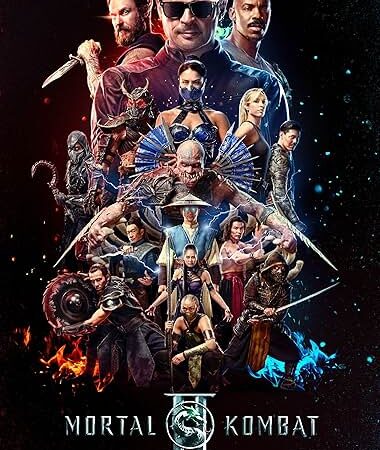
Mortal Kombat II
About the Movie
There are two reasonable ways to describe Mortal Kombat II. The first is by genre — a Action, Adventure, Fantasy film of standard runtime aimed at a broad theatrical audience. The second is by intent, which is the more interesting one. The film runs for 1 hour 56 minutes, which is the right length for what it is trying to do — long enough for the central relationships to develop, short enough that no act feels padded. The production is originally in English, Spanish, and viewers who can engage with the original-language track will get the full benefit of the performances as the actors actually delivered them. It carries a R classification, which is a useful guide for parents and for adult viewers wanting a sense of how strong the content gets before they press play.
Plot Analysis (Spoiler-Free)
At its surface, Mortal Kombat II opens with a familiar invitation: The fan favorite champions — now joined by Johnny Cage himself — are pitted against one another in the ultimate battle to defeat the dark rule of Shao Kahn that threatens the very existence of the Earthrealm and its defenders.. What the screenplay does with that opening, however, is where the film earns or loses its audience.
Rather than racing to the next setpiece, the storyline gives its central characters time to make choices the audience can argue with on the way home. That patience — uncommon in mainstream action releases — is part of what makes the film feel substantial.
Beyond the premise itself, the film treats its world as something with rules and history, which is what gives the audience reason to keep paying attention beyond the first thirty minutes.
Note: the analysis above is kept spoiler-free on purpose. Specific plot beats, twists, and the ending are left for the viewer to experience on their own.
Cast and Characters
Casting is where a project of this kind either wins early or never recovers, and Mortal Kombat II assembles a group whose track records explain why the film moves the way it does.
Principal Cast
- Adeline Rudolph — anchors the central emotional throughline of the film.
- Karl Urban — brings the kind of grounded screen presence that lets the surrounding actors do sharper work.
- Martyn Ford — anchors the central emotional throughline of the film.
Chemistry between leads is the most important variable in a film like this, and it cannot be reverse-engineered in post-production. Either the ensemble settles into a shared rhythm during shooting or it does not, and on this front the choices the casting director made hold up.
Behind the Camera
Direction
The film is directed by Simon McQuoid. The director’s fingerprints are visible in the staging choices and the editing rhythm — particularly in scenes where the camera stays on a face a beat longer than convention demands. That kind of restraint is hard to do well, and easy to do badly, which is one of the markers of an experienced filmmaker working with material they understand.
Screenplay
The screenplay is credited to Jeremy Slater, Ed Boon, John Tobias. What lifts the writing above the average for this category is the dialogue economy — characters say what they need to say and stop, rather than over-explaining their own motivations. The audience is treated as smart enough to keep up, which is a small but meaningful sign of confidence in the material.
Release Information
Mortal Kombat II opened on 08 May 2026. The film originates from United States, and that origin is part of what gives the production its specific sensibility — small details in setting and behaviour that read differently to audiences familiar with the source region than to viewers approaching it cold. For accurate region-specific availability on licensed platforms, viewers should always rely on official distributor announcements rather than third-party listings, since rights windows shift over time and vary by market.
Reported box-office performance for the film stands at $77,767,462. Commercial numbers are only one indicator of a film’s standing — many of the best films in any given year do not lead the box-office chart, and many of the loudest commercial hits are forgotten within five years. Still, the figure provides useful context for how the film has performed in its theatrical window.
Technical Details
For readers who track such things, the standard technical specifications of the film are as follows:
- Genre: Action, Adventure, Fantasy
- Language: English, Spanish
- Runtime: 116 min (1 hour 56 minutes)
- Country of Origin: United States
- Release Year: 2026
- Certification: R
Music and Soundtrack
Sound design is the part of filmmaking that audiences rarely talk about by name and yet always feel. The musical score and the silence around it shape how every scene of Mortal Kombat II lands emotionally. In a action film, the soundtrack does heavy lifting that the dialogue cannot — telling the audience when to feel tension, when to breathe, and when something has irrevocably changed. The audio work on this project is built to support the story rather than to advertise itself, which is the harder craft and the more effective one. Viewers who listen with attention will pick up on choices — ambient cues, restraint in scoring during key dialogue, careful use of silence — that contribute as much to the overall experience as anything on screen.
What Makes This Movie Worth Watching
Rather than recite the obvious, here is our editorial breakdown of what specifically lifts Mortal Kombat II above the average film in its category:
- Genuine craft in the action framework — the conventions are used as a starting point, not as a checklist to be ticked off.
- Confident direction from Simon McQuoid, particularly in scenes built around character rather than spectacle.
- Lead performances from Adeline Rudolph, Karl Urban, Martyn Ford that carry the emotional weight of the screenplay without overplaying it.
- Audience reception — the IMDb score of 6.7 / 10 (36,627 votes) reflects a film that has connected with a meaningful portion of its viewers.
- Repeat-viewing value — second watches reward attention to dialogue and visual setup that pass quickly the first time.
- Tone consistency — the film commits to a register and stays there, instead of shifting to chase audience mood.
Themes and Craft Notes
Strip the genre wrapper off Mortal Kombat II and the film is really about a smaller set of ideas — character motivation, the cost of choices, and the way the world responds to those choices. That layering is part of why the film holds up to attention paid in real time, and it is what gives the more dramatic beats their weight.
From a craft standpoint, the production choices are visible to viewers who pay attention to them. Camera placement during dialogue scenes, the rhythm of cuts in transitional moments, and the deliberate use of negative space in shots are all decisions that quietly shape the audience experience. None of these elements call attention to themselves, which is the mark of confident filmmaking — the goal is to serve the story, not to be noticed.
Editing is the other place where the craft shows. A modern feature is built in the cutting room as much as on set, and the pacing decisions visible in Mortal Kombat II suggest an editor who understood what the screenplay was trying to do and protected those instincts through post-production. Audiences may not consciously notice rhythm, but they feel it — and a film that respects audience attention earns better engagement throughout its runtime.
Audience Reception
On the audience side, Mortal Kombat II currently sits at 6.7 out of 10 across 36,627 user votes. That number reflects something specific — it is the aggregated verdict of the people who chose to watch the film and then chose to rate it, which makes it a useful but not complete signal. On the critical side, the film carries a Metascore of 46, drawn from major-publication reviews. It is worth noting that audience scores and critic scores frequently disagree, and both perspectives are useful when you are deciding whether a film matches your particular taste. Our own view, for what it is worth, is that Mortal Kombat II is best approached without the weight of expectation set by either number — let the film make its case in its own runtime.
Movie Details at a Glance

Our Take
Putting the pieces together, our editorial take on Mortal Kombat II (2026) is the following. The film does the harder work of treating its premise as something worth taking seriously, and that is reflected in choices made at the screenplay, casting, and editing stages. It is not flawless — no film in this category is — but the parts that work are the parts that matter most for the kind of viewer the project is built for.
For audiences who already enjoy action cinema, Mortal Kombat II is a comfortable yes. For audiences sampling the genre for the first time, it is a reasonable entry point — it does not require deep familiarity with earlier films in the category to follow what it is doing.
Editorial Verdict: Worth a watch
Our Rating: 3.5 / 5
The rating above reflects this site’s editorial opinion and is not an official film rating. For verified ratings and reviews, see the external references listed at the end of this article.
If the elements highlighted in this article — cast, direction, genre, tone — line up with what you usually watch, Mortal Kombat II is worth your time. Either way, the references at the bottom of this page are useful next steps for digging deeper into the people and the production background.

[…] will get the full benefit of the performances as the actors actually delivered them. It carries a R classification, which is a useful guide for parents and for adult viewers wanting a sense of how […]