
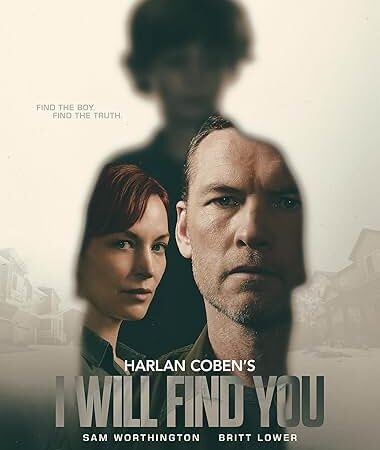
I Will Find You (2026)
Every year, a handful of crime releases arrive with enough genuine craft behind them to be worth a closer look — and I Will Find You (2026) belongs in that conversation. This article is written as a reader-friendly overview of the film — covering the people who made it, the shape of the story, the production context, and the editorial take from our side on what does and does not work. None of the sections below are intended to substitute for actually watching the film through a licensed source; they are intended to help you decide whether the runtime is worth your evening. Our short read is that the project earns its place on the watchlist for the audience it is built for. We get into why below.
About the Movie
There are two reasonable ways to describe I Will Find You (2026). The first is by genre — a Crime, Drama, Mystery film of standard runtime aimed at a broad theatrical audience. The second is by intent, which is the more interesting one. The production is originally in English, and viewers who can engage with the original-language track will get the full benefit of the performances as the actors actually delivered them.
Plot Analysis (Spoiler-Free)
The premise of I Will Find You (2026) can be sketched in a single line — A father imprisoned for his son’s murder receives evidence suggesting his child may be alive, compelling him to escape and uncover the truth. — but as is usually the case with a well-built crime, the premise is only the doorway.
What pulls the storyline together is the way the script treats its central question seriously instead of solving it neatly. The crime framing gives the filmmakers an excuse to ask larger questions — about motivation, consequence, and what people are willing to compromise on — without ever needing to lecture the audience.
It is worth saying outright: nothing about the broad shape of the story is revolutionary. What makes it work is execution — the editing choices, the performances, and the willingness to let a scene end on a question instead of an answer.
Note: the analysis above is kept spoiler-free on purpose. Specific plot beats, twists, and the ending are left for the viewer to experience on their own.
Cast and Characters
The lineup the film puts on screen is one of its strongest assets. Each of the principal performers in I Will Find You brings a specific quality the screenplay clearly needed.
Principal Cast
- Sam Worthington — anchors the central emotional throughline of the film.
- Milo Ventimiglia — plays a role that, in less careful hands, could have tipped into caricature.
- Britt Lower — anchors the central emotional throughline of the film.
Chemistry between leads is the most important variable in a film like this, and it cannot be reverse-engineered in post-production. Either the ensemble settles into a shared rhythm during shooting or it does not, and on this front the choices the casting director made hold up.
Behind the Camera
Screenplay
The screenplay of I Will Find You (2026) is credited to Robert Hull. What lifts the writing above the average for this category is the dialogue economy — characters say what they need to say and stop, rather than over-explaining their own motivations. The audience is treated as smart enough to keep up, which is a small but meaningful sign of confidence in the material.
Release Information
I Will Find You (2026) opened on 18 Jun 2026. The film originates from United States, and that origin is part of what gives the production its specific sensibility — small details in setting and behaviour that read differently to audiences familiar with the source region than to viewers approaching it cold. For accurate region-specific availability on licensed platforms, viewers should always rely on official distributor announcements rather than third-party listings, since rights windows shift over time and vary by market.
Technical Details
For readers who track such things, the standard technical specifications of the movie I Will Find You are as follows:
- Genre: Crime, Drama, Mystery
- Language: English
- Country of Origin: United States
- Release Year: 2026
Music and Soundtrack
Sound design is the part of filmmaking that audiences rarely talk about by name and yet always feel. The musical score and the silence around it shape how every scene of I Will Find You lands emotionally. In a crime film, the soundtrack does heavy lifting that the dialogue cannot — telling the audience when to feel tension, when to breathe, and when something has irrevocably changed. The audio work on this project is built to support the story rather than to advertise itself, which is the harder craft and the more effective one. Viewers who listen with attention will pick up on choices — ambient cues, restraint in scoring during key dialogue, careful use of silence — that contribute as much to the overall experience as anything on screen.
What Makes This Movie Worth Watching
Rather than recite the obvious, here is our editorial breakdown of what specifically lifts I Will Find You above the average film in its category:
- Genuine craft in the crime framework — the conventions are used as a starting point, not as a checklist to be ticked off.
- Lead performances from Sam Worthington, Milo Ventimiglia, Britt Lower that carry the emotional weight of the screenplay without overplaying it.
- Repeat-viewing value — second watches reward attention to dialogue and visual setup that pass quickly the first time.
- Tone consistency — the film commits to a register and stays there, instead of shifting to chase audience mood.
Themes and Craft Notes
A film that is content to be only a genre exercise rarely lasts in audience memory. I Will Find You reaches further than that, building its scenes around recognisable human concerns rather than category checkboxes. That layering is part of why the film holds up to attention paid in real time, and it is what gives the more dramatic beats their weight.
From a craft standpoint, the production choices are visible to viewers who pay attention to them. Camera placement during dialogue scenes, the rhythm of cuts in transitional moments, and the deliberate use of negative space in shots are all decisions that quietly shape the audience experience. None of these elements call attention to themselves, which is the mark of confident filmmaking — the goal is to serve the story, not to be noticed.
Editing is the other place where the craft shows. A modern feature is built in the cutting room as much as on set, and the pacing decisions visible in I Will Find You (2026) suggest an editor who understood what the screenplay was trying to do and protected those instincts through post-production. Audiences may not consciously notice rhythm, but they feel it — and a film that respects audience attention earns better engagement throughout its runtime.
Audience Reception
It is worth noting that audience scores and critic scores frequently disagree, and both perspectives are useful when you are deciding whether a film matches your particular taste. Our own view, for what it is worth, is that I Will Find You (2026) is best approached without the weight of expectation set by either number — let the film ‘ I Will Find You (2026) ‘ make its case in its own runtime.
Movie Details at a Glance

Our Take
Putting the pieces together, our editorial take on I Will Find You (2026) is the following. The film does the harder work of treating its premise as something worth taking seriously, and that is reflected in choices made at the screenplay, casting, and editing stages. It is not flawless — no film in this category is — but the parts that work are the parts that matter most for the kind of viewer the project is built for.
For audiences who already enjoy crime cinema, I Will Find You is a comfortable yes. For audiences sampling the genre for the first time, it is a reasonable entry point — it does not require deep familiarity with earlier films in the category to follow what it is doing.
Editorial Verdict: Undecided — see for yourself
Our Rating: 7.5/10
The rating above reflects this site’s editorial opinion and is not an official film rating. For verified ratings and reviews, see the external references listed at the end of this article.
If the elements highlighted in this article — cast, direction, genre, tone — line up with what you usually watch, I Will Find You is worth your time. Either way, the references at the bottom of this page are useful next steps for digging deeper into the people and the production background.
Frequently Asked Questions
Official Trailer
Related Movie Articles You May Enjoy
If you found this article useful, you may also be interested in the following related movie reads from our archive:
- Spider-Man: Brand New Day (2026) — in the Crime category.
- The Sheep Detectives (2026) — in the Crime category.
External References and Further Reading
For verified information from authoritative sources, the following references are recommended:
- IMDb — Official Page → View the verified film record on IMDb.
- Wikipedia — Background Article → Read the encyclopedia entry covering background and production history.
- Rotten Tomatoes — Reviews → See aggregated critic and audience reviews.