
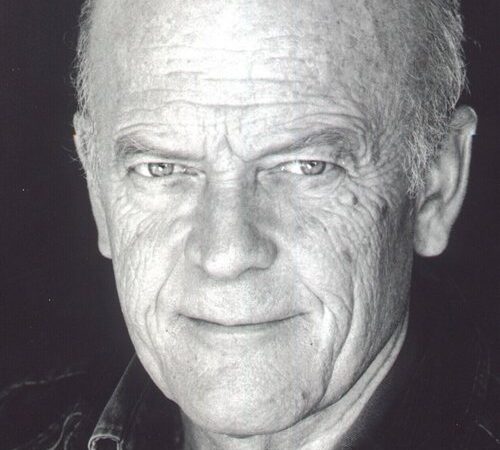
Michael Byrne — Actor Biography, Career and Notable Films
The career of Michael Byrne is worth the time it takes to walk through. Across a list of credits that mixes mainstream and smaller projects, he has developed a distinct screen identity. Born on 1943-11-07 in London, England, UK, he has built a career that draws on that background while moving through a variety of cinematic worlds. This article is an editorial overview of his career — the verified biographical details, the notable filmography, the kinds of roles he tends to take on, and the editorial reading on what makes him a performer worth following.
Early Life and Background
Michael Byrne was born on 1943-11-07 in London, England, UK. he passed away on 2026-06-20. A performer’s early life rarely tells the full story of who they become on screen, but the place a person grows up in often leaves traces in the kinds of roles they are drawn to and the way they carry themselves in front of a camera. Reading those traces is part of what makes following a long career interesting.
Also known as: Майкл Бирн. Performers often have multiple recorded name variations across international markets, festival programmes, and credit databases, which is why these alternates are worth listing for completeness.
Career Overview
Reading the filmography end to end, what stands out is the willingness to mix scale — a major studio project followed by something smaller and more personal, then back again. That alternation is often what keeps a performer’s on-screen instincts sharp.
Working in acting as the primary creative track, Michael Byrne has built up a body of work that spans different genres, scales, and tonal registers. The list below highlights some of the more notable titles in that filmography. Before getting to the list itself, a few patterns are worth flagging.
Career Patterns
Three observations stand out when looking at the resume as a whole. The first is the variety: rather than locking into one register, the credit list moves between heavier dramatic work, lighter material, and the occasional genre exercise. That spread is uncommon, and it usually reflects an active choice on the performer’s side rather than chance casting.
The second observation is collaboration. Several of the most-discussed credits involve directors and writers who returned for repeat projects, which is one of the clearest signs that the working relationship was productive on both sides. Filmmakers do not casually re-cast a performer — they do it because the previous collaboration produced something they want to repeat.
The third observation is range across project scale. A career that mixes studio-scale features with smaller independent films suggests a performer who is interested in the work itself, not just the visibility. Each of those scales asks different things of an actor, and being credible across both is harder than it looks.
Notable Filmography
Below is a selection of the most widely seen titles on the resume, drawn from across his career rather than weighted to any single period. The list is illustrative rather than exhaustive.
- Harry Potter and the Deathly Hallows: Part 1 (2010) — as Gellert Grindelwald
- Braveheart (1995) — as Smythe
- Indiana Jones and the Last Crusade (1989) — as Vogel
- Gangs of New York (2002) — as Horace Greeley
- Tomorrow Never Dies (1997) — as HMS Bedford Admiral Kelly
- Mortdecai (2015) — as The Duke
- The Omen (1976) — as Monk (uncredited)
- The Sum of All Fears (2002) — as Anatoli Grushkov
- The Saint (1997) — as Vereshagin
- Battlefield Earth (2000) — as Parson Staffer
- A Bridge Too Far (1977) — as Lt. Col. Giles A.M. Vandeleur
- Proof of Life (2000) — as Lord Luthan
Even within a short list like this, a few patterns are visible. The credits move between ensemble pieces and roles where he carries the central arc, and that alternation is one of the markers of a working performer who is being trusted with progressively bigger creative responsibilities.
On-Screen Style and Range
What sets Michael Byrne apart on screen is a kind of grounded restraint — the willingness to do less in a scene where a lesser performer would reach for more. That instinct is what gives the bigger moments their weight when they come.
Range is the word audiences and casting directors use to mean different things. For a working actor, it usually means the ability to credibly inhabit characters whose interior lives are not similar to one another. By that measure, the choices visible across this filmography suggest a performer who is interested in stretching rather than repeating.
The other useful indicator of range is what happens at the edges of the resume — the smaller roles, the supporting parts, the projects that did not generate headlines. A performer who only shows up to lead a feature is one kind of artist; a performer who is willing to take a third-billed role in a smaller project because the material is interesting is a different kind. The mix on this resume points toward the second category, which generally produces more durable careers.
What Makes This Career Worth Following
For viewers building out their watchlist or trying to decide which performer’s back catalogue is worth a deeper dive, the following are the editorial reasons we would point at Michael Byrne:
- Consistency across projects — the work holds up regardless of whether the surrounding film is great, good, or merely competent.
- Willingness to take risks — role choices visible on the resume include parts that other performers might have passed on, and those bets generally pay off.
- Collaboration history — repeat work with strong directors and writers suggests the kind of on-set presence that creative teams want to bring back.
- Quiet craftsmanship — the technical work is built to serve the story rather than to advertise itself, which is what separates a working actor from a star performance.
- Genre range — credibility across different categories of film is the harder achievement, and one this filmography demonstrates.
Cultural Footprint
A performer’s footprint shows up in two places — the credits roll and the conversations that happen years later about specific scenes. On both counts, Michael Byrne has accumulated more of each than the average working actor.
Cultural footprint is also visible in how a performer is referenced inside the industry itself. Casting choices in newer films sometimes deliberately echo earlier roles — either to play with audience expectation or to signal a connection the filmmakers want viewers to feel. When a performer’s past work becomes shorthand that other films can draw on, that is one of the clearest signs of having moved beyond individual roles to something more lasting.
Personal Life
Out of respect for the performer’s privacy, this section keeps the focus on publicly verified information rather than speculation. What can be said is that Michael Byrne has, over the course of a substantial career, generally kept the spotlight on the work rather than on personal matters — a choice that has become increasingly difficult to maintain in the current media environment, and one that is worth respecting in a profile like this. Readers interested in deeper personal background should consult verified primary sources such as published interviews, official websites, and authoritative encyclopedia entries.
Quick Facts
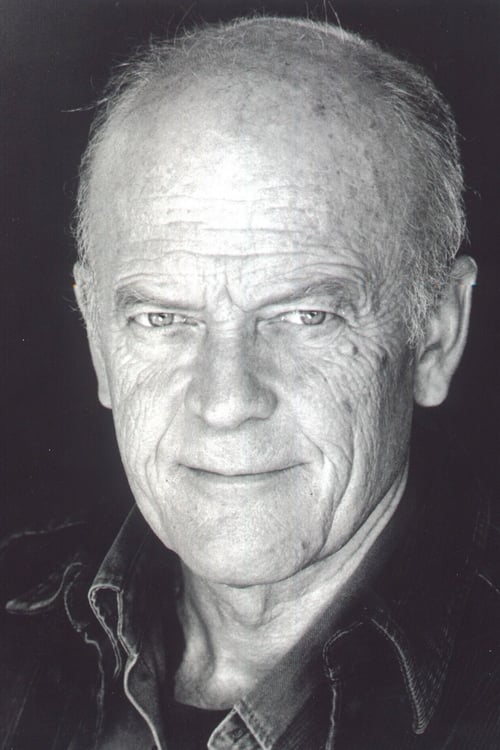
Editorial Note
Looking at the career as a whole rather than any single title is the right frame for a profile like this. For readers using this page as a quick reference before watching one of the listed titles, the filmography section is the most useful starting point. For readers approaching the profile cold, the career overview earlier in the article gives the broader picture.
Editorial profiles like this one are necessarily a snapshot — careers continue to develop, new credits get added, and earlier work is sometimes reassessed in light of what comes later. The external references at the bottom of this page are the right place to verify current and updated information about Michael Byrne.
Frequently Asked Questions
External References
For verified information from authoritative sources, the following references are recommended:
- IMDb — Official Profile → View the verified IMDb record and full credits.
- Wikipedia — Biography → Read the encyclopedia entry covering career and background.
- Rotten Tomatoes — Filmography Coverage → See aggregated reviews of films from this performer.
[…] film is directed by Christopher Nolan. The director’s fingerprints are visible in the staging choices and the editing rhythm — […]